Discover the Chinese Home Video Game Museum: A Digital Treasure Trove for Gaming History
The Chinese Home Video Game Museum is a meticulously curated online platform dedicated to preserving and showcasing the rich history of home gaming consoles and handheld devices from China and Taiwan. Designed for retro gaming enthusiasts, historians, and collectors, this ad-free digital archive offers unique insights into gaming systems that shaped the region’s cultural landscape. Below is a guide to its key features and how to explore its offerings.
1. What Is the Chinese Home Video Game Museum?
This website serves as a virtual museum, focusing on gaming hardware and software that thrived in Chinese-speaking markets. Unlike mainstream platforms, it highlights lesser-known consoles and games that were pivotal in Asia but often overlooked globally. Its mission is to document and celebrate this niche gaming heritage through detailed catalogs, historical context, and community contributions.
2. Key Features
A. Comprehensive Console Library
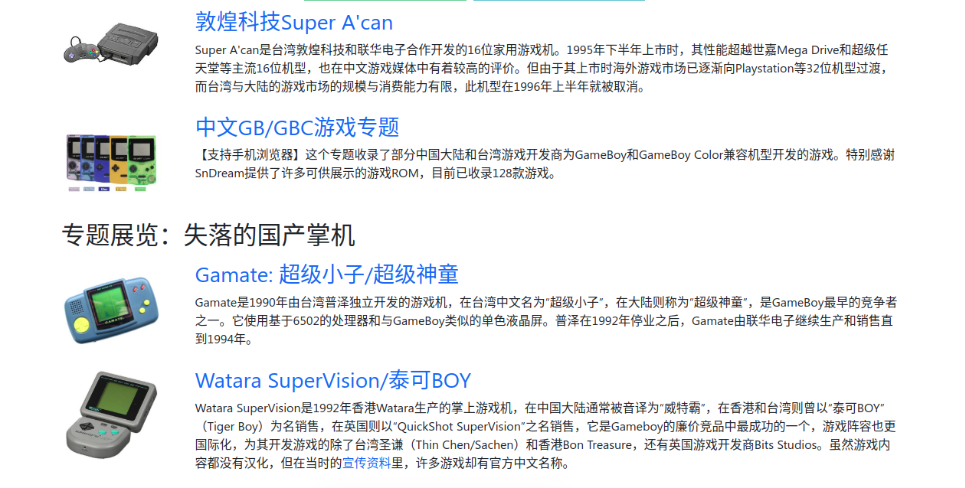
- Classic Consoles: Explore iconic systems like the Famicom (NES), Sega Genesis, and Taiwan’s Super A’can—a 16-bit console developed by Dunhuang Technology and United Microelectronics Corporation. Despite its superior hardware, the Super A’can was discontinued due to the global shift toward 32-bit systems[^1].
- Handheld Devices: Discover rare handhelds like the Gamate, Watara SuperVision, and Mega Duck. The site also details the GameKing series (I, II, and III), a budget-friendly line popular in China during the 2000s.
B. Chinese Game Boy Collection
- A dedicated section features 128 Chinese-language Game Boy and Game Boy Color games, preserved thanks to contributions from collector SnDream. This archive is invaluable for studying regional adaptations of global franchises.
C. Lost Console Archives
- Learn about obscure devices like the PDC100 Pocket Dream Console, released by Zhuhai Conny in 2008 with 100 built-in games. Such entries highlight China’s experimentation with affordable, all-in-one gaming solutions.
D. Community-Driven Preservation
- The site relies on user contributions to expand its database and remains ad-free, emphasizing its nonprofit, educational mission. Visitors can submit photos, manuals, or personal anecdotes to enrich the archive.
3. How to Use the Website
- Navigate by Category: Use the homepage menu to browse consoles, handhelds, or regional games.
- Search for Specific Content: Look up niche terms like “Super A’can” or “GameKing III” to find technical specifications and historical context.
- Contribute: Share rare materials or insights via the contact page to support preservation efforts.
- Support the Project: Consider donating to help maintain the site’s server and research initiatives.
4. Why It Matters
For Western audiences, the museum offers a window into gaming innovations outside the U.S.-Japan axis. For example, the Super A’can rivaled the Sega Genesis in power but faded due to market shifts—a story mirroring challenges faced by consoles like the Sega Saturn. Similarly, the GameKing series reflects China’s grassroots gaming culture, akin to the rise of Tetris on Soviet-era hardware.
Conclusion
The Chinese Home Video Game Museum is more than a nostalgia trip; it’s a vital resource for understanding gaming’s global evolution. Whether you’re a researcher, collector, or curious gamer, this platform invites you to explore a hidden chapter of digital history—and help preserve it for future generations.